


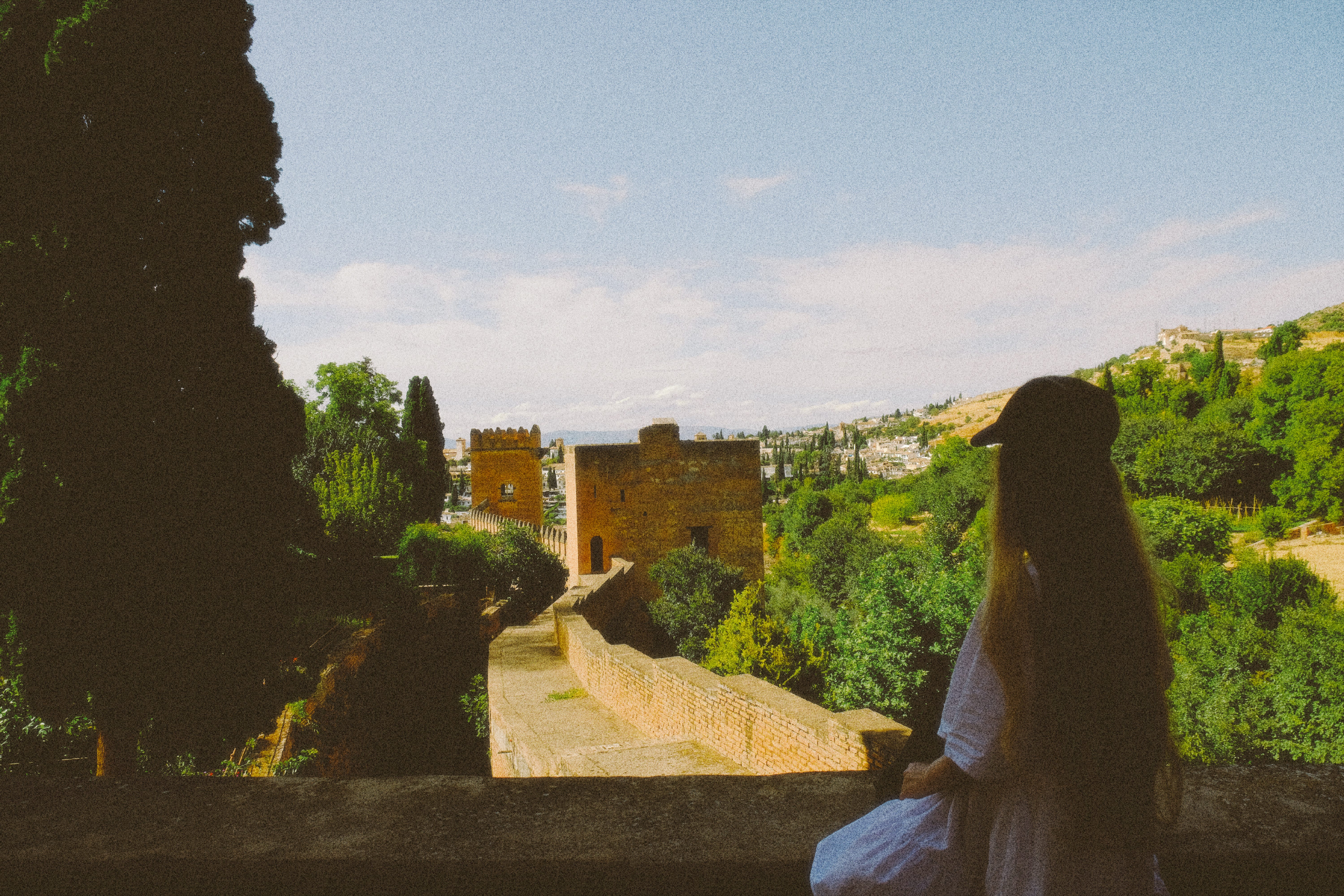
August in Granada is not particularly conducive to imagining life in the fourteenth century. It is hot enough to make most thoughts beyond finding shade feel unnecessarily ambitious.
Inside the Nasrid Palaces, though, water is everywhere. It runs through channels and fountains, and at the Court of the Lions it manages to make August briefly less offensive.
I grew up in Andalusia, so I’d been to the Alhambra more times than I could count. Locals like me had visited on field trips, with out-of-town visitors, or just to gaze at centuries of history.
Rising above Granada on the Sabika hill, the complex was built by the Nasrid dynasty, the last Muslim dynasty to rule in the Iberian Peninsula. Its palaces, gardens and fortifications were built and transformed over generations. Today it is a UNESCO World Heritage Site and one of Spain’s most visited monuments.
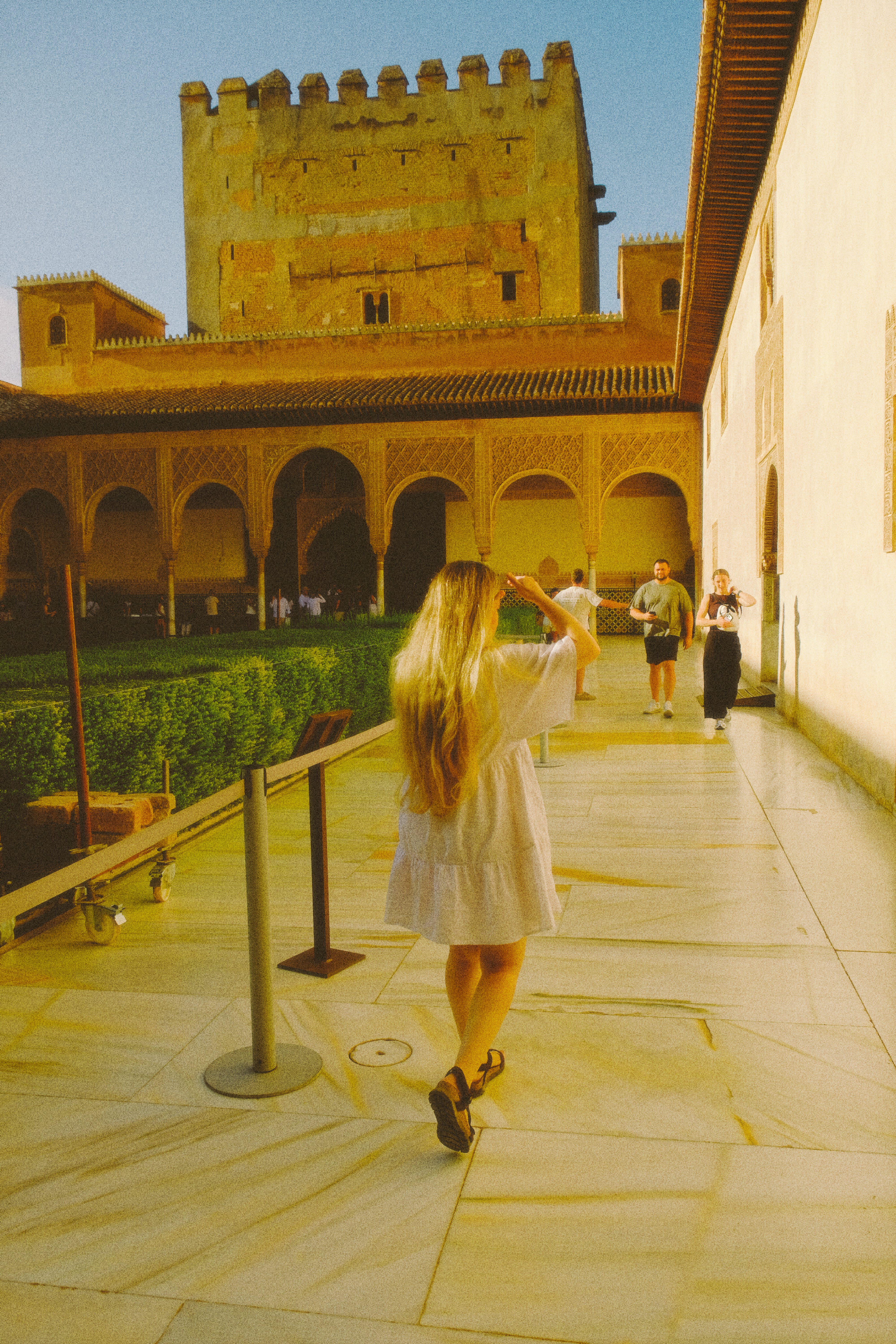
People come for the architecture, of course: ceilings that make everyone stop and look up, walls covered in calligraphy, courtyards built around water and that peculiar Alhambra trick of making stone seem almost weightless.
But we also arrive already knowing many of its stories.
Boabdil, the last Nasrid ruler. The famous sultan and penultimate ruler Muley Hacén. The Catholic Monarchs, Queen Isabella I and King Ferdinand II, who took over the Alhambra in 1492 and brought Nasrid rule to an end. These stories we knew were of conquest, surrender, kingdoms gained and lost. They were overwhelmingly filled with the stories of men, and hardly needed an introduction.
Once I noticed it, I couldn’t stop thinking about it. Who gets remembered when we travel and who disappears? It turns out I wasn’t the only one who wanted to know.
Standing there and gazing at centuries of history, I wondered if it was time to do something different. I knew that women had been here, because here was where life happened. Women had lived in these rooms and moved through these courtyards. Some women were royals; others worked for them. Some left behind names, property and political decisions. Others left almost nothing that would allow someone like me to find them centuries later. But I would find them now.
Granada is very good at remembering its men. Apparently, so was I.
And yet once I noticed it, I couldn’t stop thinking about it.
Who gets remembered when we travel and who disappears?
It turns out I wasn’t the only one who wanted to know.
Alhambra en Femenino
Almost thirty years ago, María Elena Díez Jorge, Professor of Art History at the University of Granada, began asking many of the same questions.
What histories of women could be uncovered in Spain’s most famous monument?
She first wrote about women’s spaces in the Alhambra in 1998, at a time when very few researchers were asking how women had occupied palaces and houses throughout history. Years later, Díez Jorge realized that many of the old stereotypes were still remarkably difficult to dislodge. Women continued to be presented as passive or peripheral figures in the Alhambra, while much of the research challenging that image remained within academic circles. She wanted it to reach the people actually walking through the palace.
In partnership with the Patronato de la Alhambra y Generalife, she launched Alhambra en Femenino, a project that highlights the historical role of women throughout the palace complex. The project brings together specialists and makes their research available beyond academia, recovering women of different classes and conditions who inhabited, governed, worked in and helped shape the Alhambra.
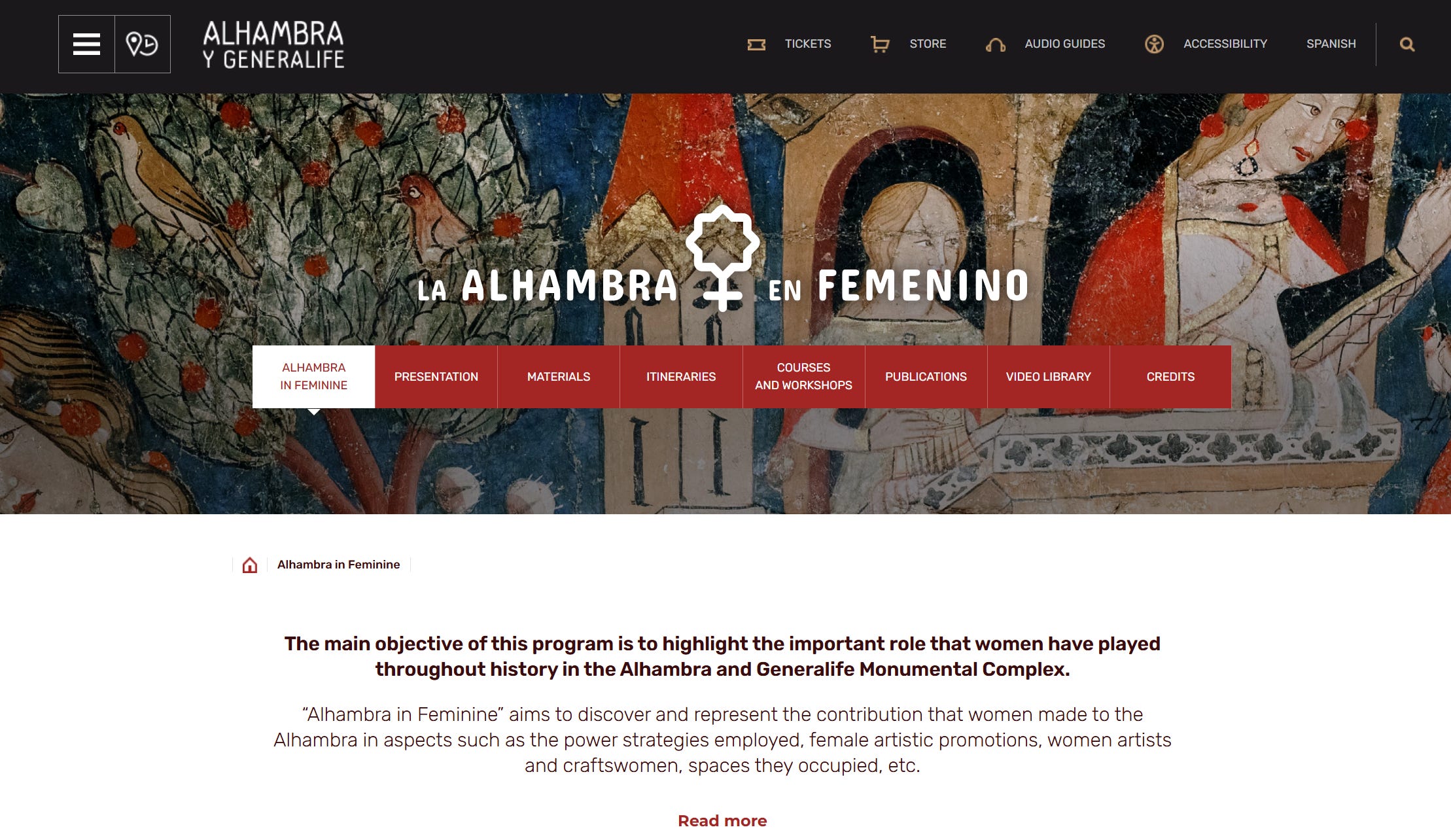
The project follows their traces through places visitors can still walk today, from Comares and the Palace of the Lions to the baths and the Partal. Sultanas and queens appear alongside workers, artisans, enslaved women and others whose lives intersected with the same buildings visitors come to admire.
Research, Díez Jorge argues, is alive. Things said thirty years ago sometimes need to be reviewed and reread, and even the words we use to describe the past can carry assumptions that need to be reassessed.
What other history was left to reconsider?
I had come back to Granada to find out.
The Queens We Never Knew
I had started my search with the obvious candidates, the women I assumed history would have found hardest to lose: the queens.
I admit that I got quite good at visualizing them.
I could see Fāṭima bint al-Aḥmar sitting in Comares, one of the most prominent buildings in the complex, after bringing her son Ismāʿīl I to the throne in 1314. The poet Ibn al-Jaṭīb called her the dynasty’s “central pearl.”
I could see Zahr al-Riyāḍ writing diplomatic letters to Alfonso V of Aragon in the fifteenth century, influencing his political decisions. He called her “Queen of Granada”.
Since Helen of Troy sparked the Trojan War, women have proved to be remarkably convenient people to blame for historical upheaval, whether through their jealousy or simply by being beautiful enough to cause trouble.
And I could see Aixa, Boabdil’s mother, navigating the drama of the final Nasrid court, after her husband Muley Hacén fell madly in love with another woman. By some accounts, it was her jealousy that led to the fall of the Nasrid kingdom.
But Díez Jorge saw something rather less romantic and considerably more political. There may have been conflict, she told me, but rivalry over power and succession makes more sense than reducing Aixa to a jealous wife. Since Helen of Troy sparked the Trojan War, women have proved to be remarkably convenient people to blame for historical upheaval, whether through their jealousy or simply by being beautiful enough to cause trouble.
“Language can be very patriarchal,” Díez Jorge writes in a blog post. “Power shifts orchestrated by men are called ‘political strategies’ while those organized by women are condemned as ‘conspiracies’ born out of romantic jealousy.”
Marriage was politics. Motherhood could be politics. And who produced the next ruler? That was very definitely politics.
These women had names, families and alliances, enough pieces left behind to make imagining them possible.
But there were other stories that were harder to visualize, like a marriage agreement from before 1273 belonging to the Nasrid princess Amat al-ʿAzīz, with twenty enslaved Black women listed among the property. They came from Bilād al-Sūdān, the medieval name for a vast region of Africa south of the Sahara. While the princess’ name survives, the individual names of the twenty women do not.
Learning Where to Look
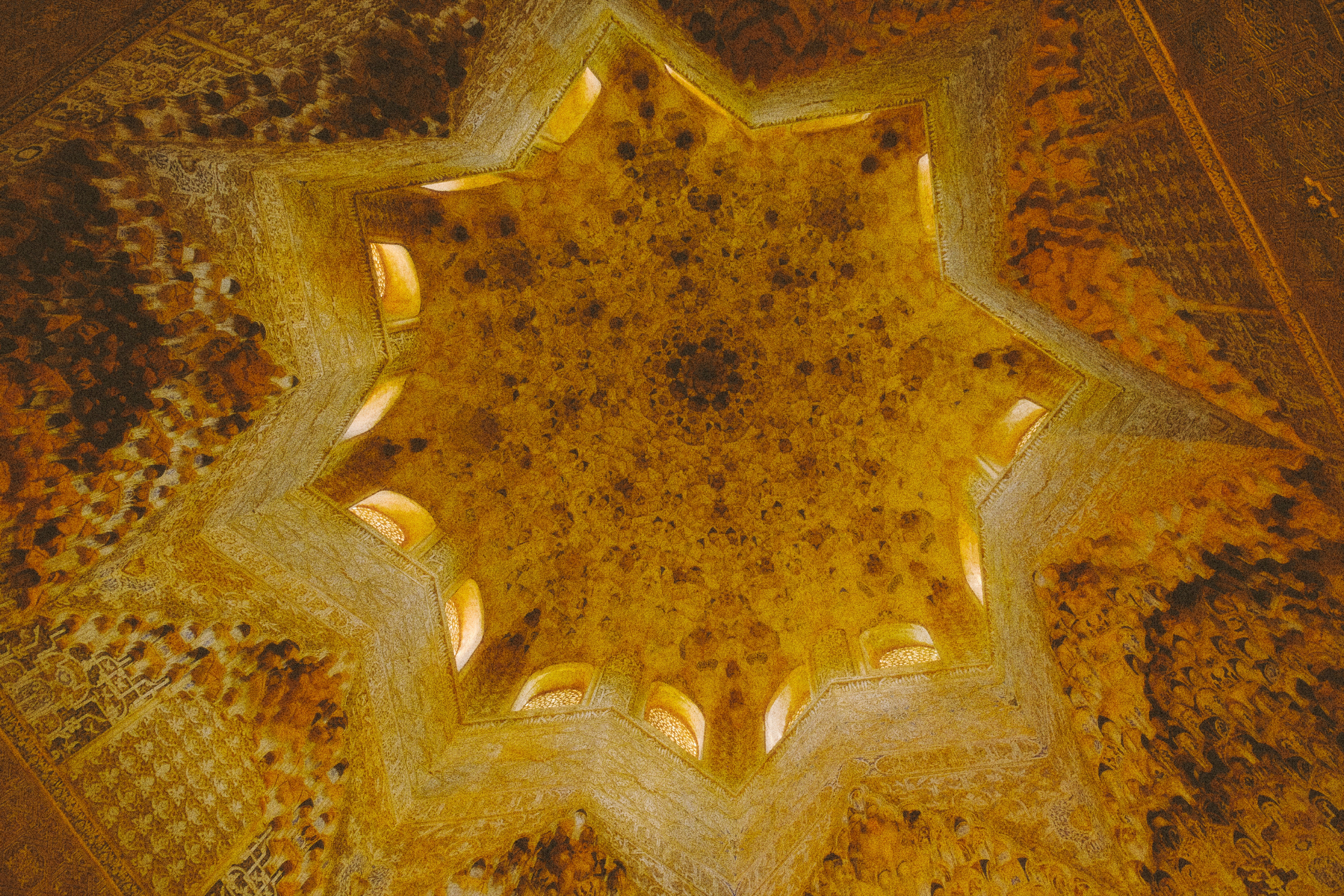
Walking through rooms built to preserve power, that absence began to feel more interesting than another royal biography. I had come looking for the women hidden behind Granada’s kings and had naturally gone straight for queens.
It hadn’t occurred to me that I was still accepting the old rules, that history was only relevant when the people in it had titles, property, political influence and, preferably, some excellent family drama.
In the Alhambra, the ceilings are magnificent, so magnificent that looking down feels almost impolite. But ordinary life leaves different traces.
One of those traces led Díez Jorge to Isabel de Robles, a potter who worked in the sixteenth century replacing lost Nasrid pieces and producing new tile designs.
Isabel had been there all along, in building accounts that were already known, but had attracted so little attention that nobody had thought to investigate her in detail or ask questions that might have seemed perfectly natural had the artisan been a man, including whether she was paid the same.
Finding women in history doesn’t always require uncovering something nobody knew existed. Sometimes what needs uncovering is our reason for not having found it interesting before.
“For me, it confirmed that there had also been women’s hands in the walls of the Alhambra,” Díez Jorge told me.
I kept thinking about that as I walked. I had spent much of the morning staring at walls designed to impress me, only to discover that one of the women I was looking for had been present in them in a much more literal sense.
It was a rather good reminder that finding women in history doesn’t always require uncovering something nobody knew existed. Sometimes what needs uncovering is our reason for not having found it interesting before.
Díez Jorge put it more simply. Asking seriously about women in history may sound obvious now, she told me, but it still isn’t. “But they are there,” she said, “in the sources, in the documents, in the remains of material culture, in life.”
The twenty unnamed women had shown me what happens when history leaves too little behind for a life to be reconstructed. Isabel de Robles suggested something rather different: sometimes the evidence survives perfectly well, but somebody still has to decide that the person inside it is worth another question.
By then, I wasn’t really searching for queens anymore. I was trying to work out what else I had learned not to see.
The Women We Thought We Knew
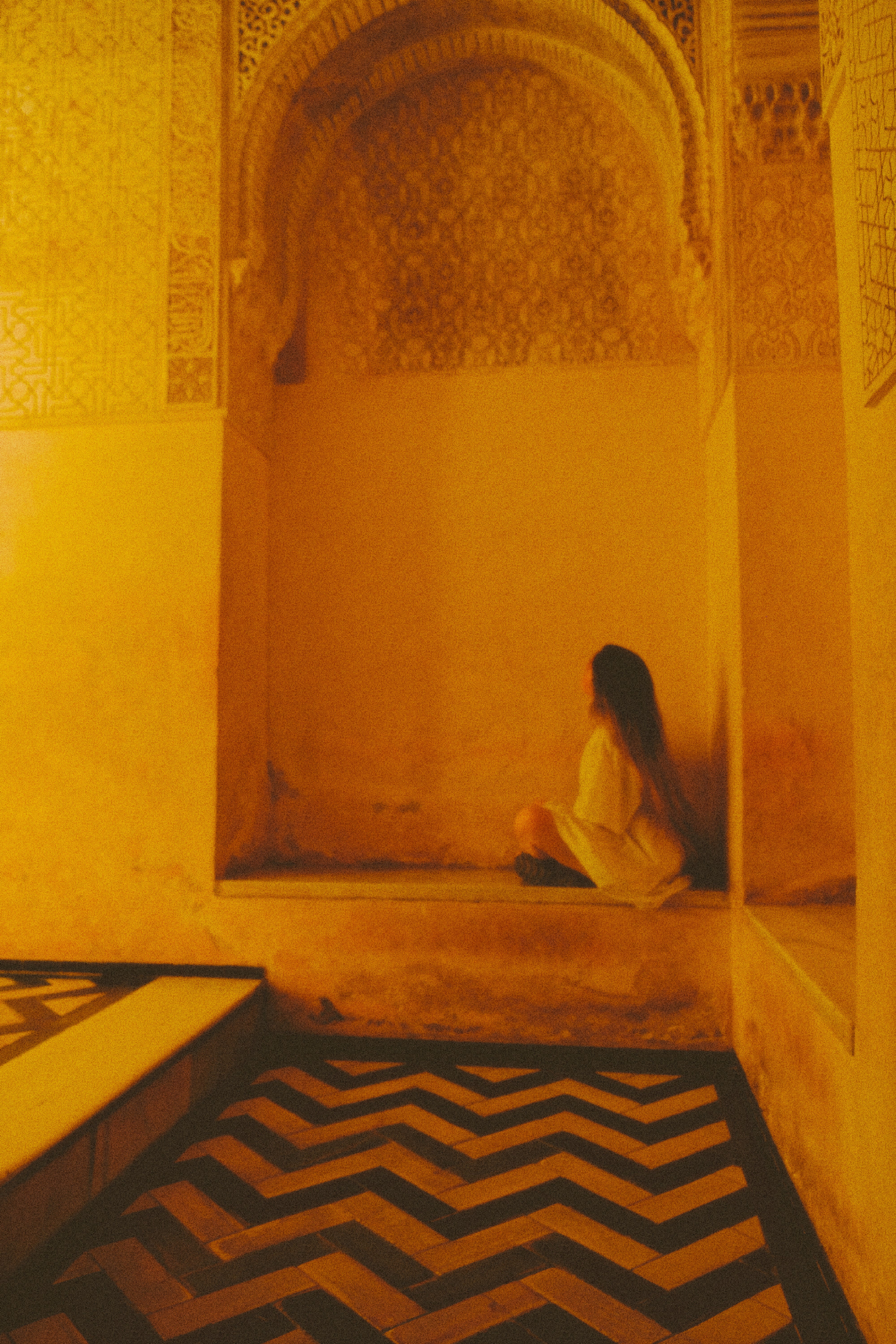
By this point I had spent enough time trying to recover women from fragments that the next discovery felt almost backwards.
Some women of the Alhambra were not difficult to find at all. In fact, they had been remarkably difficult to escape.
The woman of the harem has survived beautifully: mysterious, secluded, usually gorgeous, occasionally naked and apparently blessed with enormous amounts of free time. Walking through the spaces associated with the Nasrid court, it is surprisingly easy to bring her with you. Centuries of writers, artists and travelers have already done much of the imaginative work.
The problem is that she tells us considerably more about the people who later imagined the women of the Alhambra than about the women themselves.
Díez Jorge told me that the harem remains perhaps the most persistent and unfair stereotype surrounding them. The familiar picture is one of naked, idle women without much agency or judgement, consumed by jealousy and envy and waiting for the desires of men to give their lives a plot.
The historical reality was considerably more complicated. The harem was an institution inhabited by different kinds of people, including women with property, capacity and political strategy of their own.

The Baño de Comares, or Comares Bath, the only medieval Islamic bath to survive practically intact in the West, made the contradiction particularly difficult to ignore. Standing in a space that has inspired so much fantasy, I thought about how readily we fill historical silence. If we don’t know exactly what a woman did in a room seven centuries ago, apparently someone will eventually put her on a cushion.
Díez Jorge, who I had come to know by her first name, Elena, offered me a rather different woman to picture there.
When she visits the Baño de Comares, she thinks of Isabel de Robles.
After the Christian conquest, the same female potter whose name had almost disappeared into the building accounts worked here replacing pieces of tilework. Elena told me that she would like visitors looking at the bath to think not only of the familiar fantasy of naked women being watched by a man, but also of an artisan actually working in the space.
I liked the collision between the two images. One has had centuries of romance, paintings and fantasy working in its favour. The other involves a woman whose hands we can actually place in the history of the building.
Perhaps disappearing from history doesn’t always mean becoming invisible. Sometimes it means becoming someone you never were.
It also made the women I had been looking for seem connected in a way I hadn’t expected. The twenty women in Amat al-ʿAzīz’s marriage agreement had almost disappeared because history had left us too little with which to imagine them individually. The women of the harem had suffered something almost opposite. Generations had supplied so much beauty, idleness, jealousy and desire that the fantasy became easier to remember than the lives underneath it.
Looking for Granada’s women was no longer only about recovering names. It was teaching me to be suspicious of some of the stories that had survived perfectly well.
Perhaps disappearing from history doesn’t always mean becoming invisible. Sometimes it means becoming someone you never were.
Leaving the Alhambra
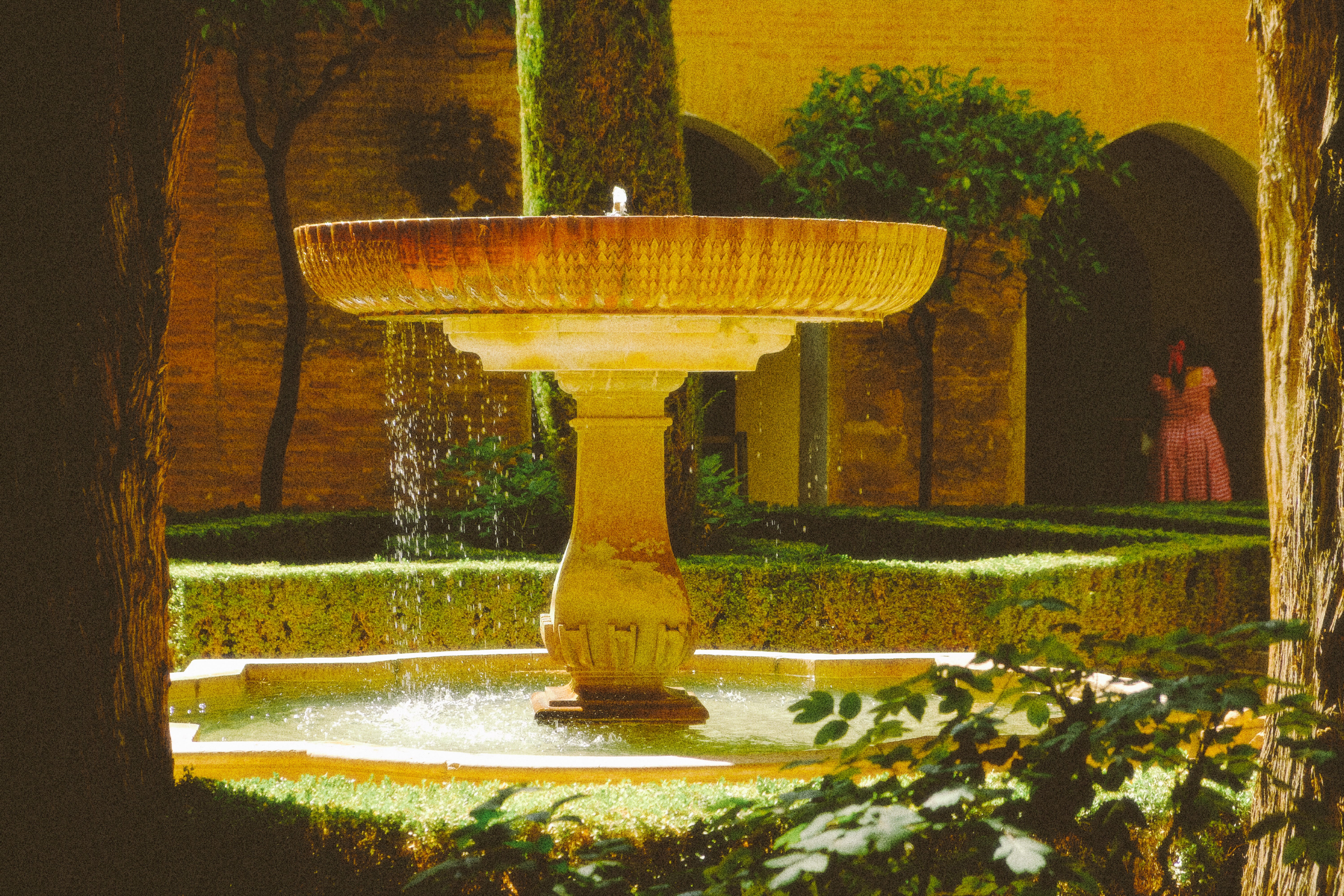
By the time I began making my way out, I had stopped trying to count how many women I had found. That had been the wrong game anyway.
The Alhambra was still doing what it had done when I arrived: water running through the courtyards, visitors craning their necks towards ceilings, cameras pointed at the same impossible details. But the place felt more crowded to me now.
Sultanas like Fāṭima had given the rooms of power a different occupant. Zahr had slipped into the diplomatic world I had assumed belonged to kings, Aixa had complicated the final years of the dynasty, and somewhere behind all of them were women whose names I would never know, alongside artisans and workers whose lives had left quieter traces.
I kept thinking about something Elena had told me about beginning her own research almost thirty years ago. She already knew she would not find all the answers she wanted. What mattered were the questions.
By then, I understood what she meant rather better than I had at the beginning of the day. Nothing I had been looking for was really separate from the Alhambra I already knew. The women hadn’t been waiting in some secret room for somebody to discover them. They had been inside the same history all along.
I had simply been taught, and had learned, to notice some lives more easily than others.
Then I left the palace and went looking for a woman Granada had made considerably easier to find.
The Woman Granada Remembered
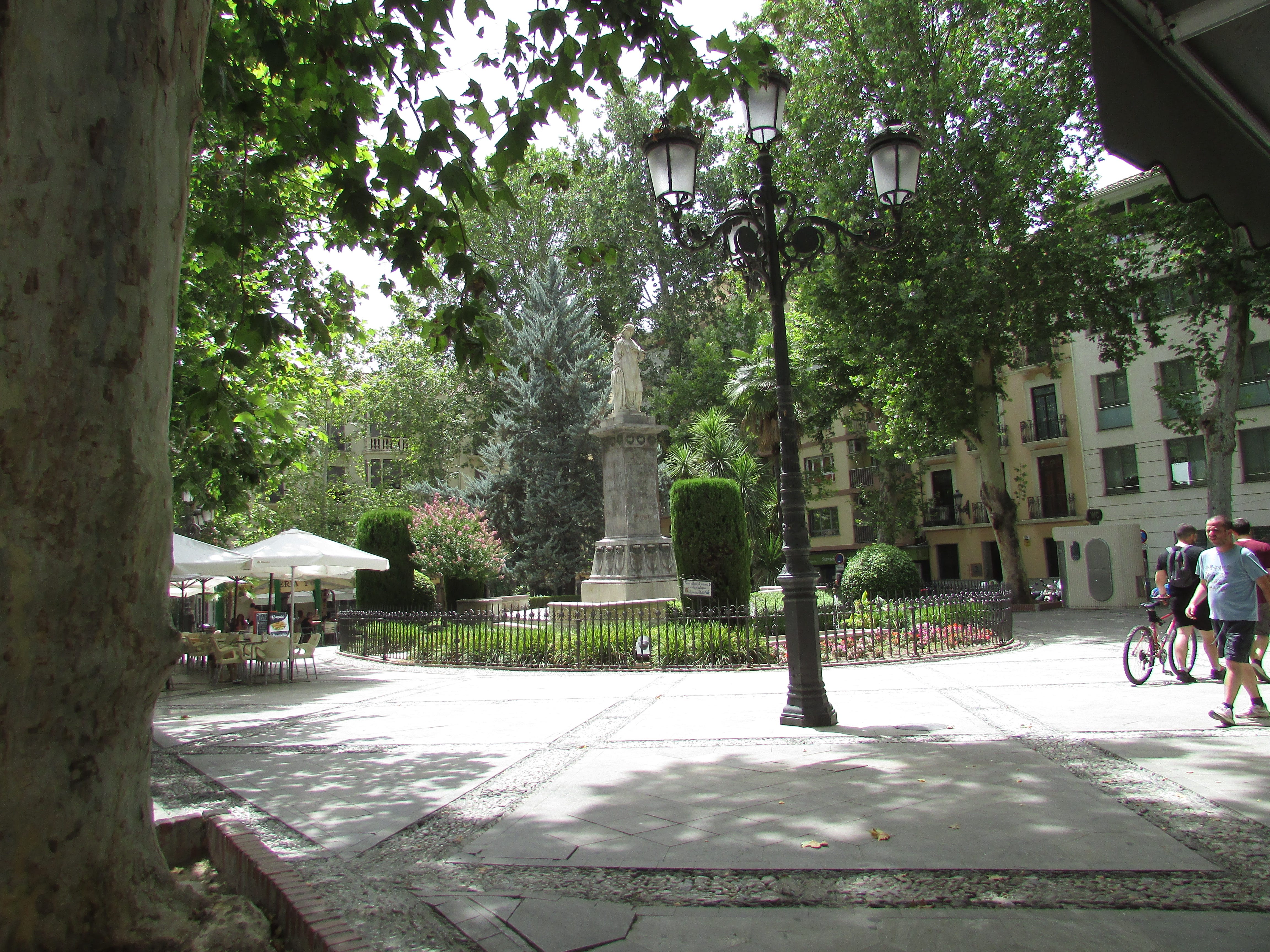
Back in the city, the August heat had emptied much of Plaza Mariana Pineda. It is a pretty square, quiet when I arrived, with the sort of name you can pass a hundred times without stopping to ask who it belonged to.
After several hours looking for women through palaces, chronicles and marriage contracts, Mariana Pineda required considerably less detective work.
I mean, Granada gave her a square.
Her former home still stands on Calle Águila. There is a route through the city tracing her life, and Federico García Lorca turned her story into a play. Her name, unlike those of the twenty women I had been thinking about earlier, is very much still here.
A woman can be condemned by one generation and placed on a street sign by another.
Mariana was twenty-six when she was executed in Granada in 1831 for her involvement with the liberal cause. She refused to give up the names of others implicated with her.
“Never will an indiscrete word escape my lips to compromise anyone,” she had said. “I have too much strength of mind to grab at this final bribe. Without a doubt, I prefer a glorious death over shaming myself by betraying a living person.”
After her death, she became a symbol of liberty and resistance. Even her words had been preserved.
For once, I seemed to have found a woman Granada had decided not to forget. Except memory, I was learning, is rarely that well behaved.
Mariana’s place in the city changed with the politics around her. Liberal governments celebrated her and a commemorative plaque was placed on her former home in 1870. Her birthplace on Carrera del Darro is now a small hotel bearing her name. Her memory was revived during the Second Republic, pushed aside under Franco and recovered again later.
The woman hadn’t changed, but the people doing the remembering had.
Standing in a square that now carries her name, that distinction felt important. Perhaps the question was never simply why some women disappear from history while others survive.
The question of who gets remembered when we travel and who disappears also depends on who is doing the remembering, and when.
A woman can be condemned by one generation and placed on a street sign by another.
What We Choose to Remember
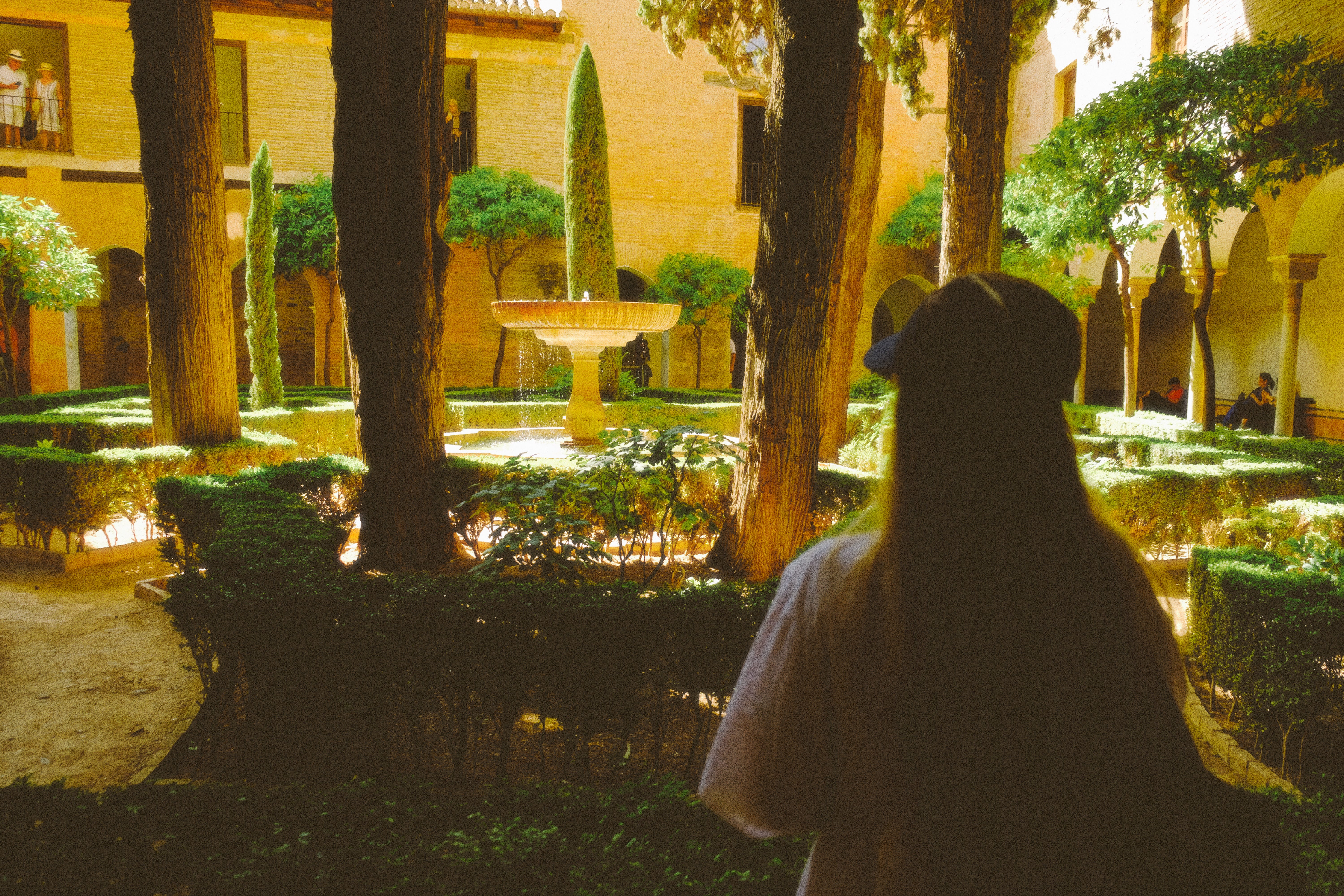
By the end of the day, I wasn’t sure I had answered the question I came with.
Who gets remembered when we travel and who disappears?
I had started by assuming the answer would be simple. Men had been remembered; women had been forgotten. Granada had complicated that idea rather quickly.
Some women had never disappeared completely. Their names were sitting in diplomatic letters, chronicles and marriage agreements, waiting for someone to ask about them. Others survived only at the edges of somebody else’s story. Some became queens in history and strangers in popular memory, while others remained vividly present in our imagination but underneath stories that may have told us more about the people remembering them than about the women themselves.
Mariana had complicated the question once more. Her name had survived, disappeared from public prominence and returned as the politics around her changed. Being remembered, I had learned, was not necessarily permanent either.
Walking through Granada afterwards, I kept thinking about how easily we accept the version of a place we are given. We photograph the palace, learn the king, repeat the story on the plaque and move on. Travel can make us feel wonderfully curious while still allowing us to ask exactly the same questions everyone asked before us.
Perhaps that was why something Díez Jorge had told me stayed with me. When she began asking about the women of the Alhambra almost thirty years ago, she already knew she would not find every answer she wanted.
What mattered were the questions.
About the Author

Mar Tobaruela is a writer, pianist, songwriter and film composer based in Spain. Her interests range from literature and cinema to history, art and culture.
Acknowledgments
Special thanks to Dr. María Elena Díez Jorge for so generously sharing her time, expertise and research on the women of the Alhambra, and to the Alhambra en Femenino project and the Patronato de la Alhambra y Generalife for the invaluable research and resources that informed this piece.
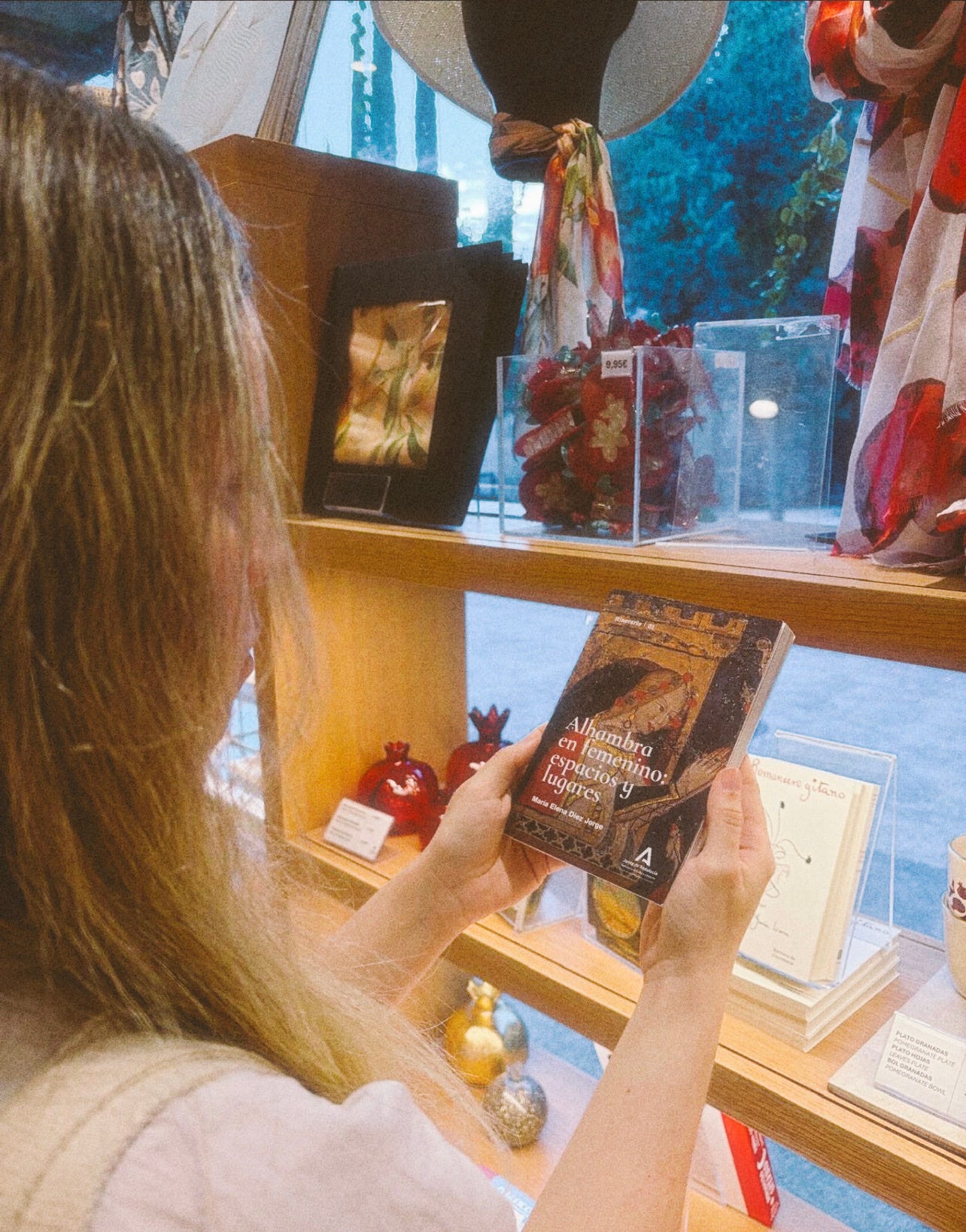
For readers who would like to explore these stories further, Dr. Díez Jorge’s Alhambra en Femenino: Espacios y Lugares offers an itinerary through the Alhambra following the women who inhabited, worked in and shaped its spaces. The book itself is structured as a route through the complex, recovering women of very different classes and conditions along the way.
To my parents, for always being by my side, for your unwavering support in everything I do, and for accompanying me every step of the way. Thank you both for your help with the photographs, and for sharing this journey and so many special moments with me.
And to my mother, for capturing in words the feeling of being in such a magical place:
“The serenity of walking through the Alhambra, with the gentle sound of water and surrounded by its lush green pathways, transports you back to the splendor of Granada’s past.”

Everyone's craning at the ceilings and Isabel de Robles had her hands in the actual walls. 'The evidence survives perfectly well, but somebody still has to decide the person in it is worth another question' - as someone who plans trips for a living, this is the tour I'd put clients on before the Nasrid Palaces. The kings have had their run 🏺
Beautiful and expansive writing. I'll take this perspective to other places I visit, including in my home state